Drone Taxi Maiden Flight Sparks Administrative Turf War at Port City
Sri Lanka's first passenger drone taxi completed a short demonstration flight with two Ministers on board, but the event exposed a regulatory dispute between the Civil Aviation Authority and the Port City Economic Commission.
In 60 seconds
- Sri Lanka's first passenger drone taxi took off yesterday at the Colombo Port City with two Ministers on board.
- A dispute arose when the Port City Economic Commission questioned the lack of local commission clearance despite CAASL approval.
- CAASL stated that all national security and aviation regulatory clearances were properly obtained.
- The aircraft used was a Chinese-manufactured EHang E216 autonomous passenger vehicle.
Sri Lanka took its first step towards autonomous passenger air transport yesterday (11) as an electric drone taxi completed a brief demonstration flight at the Colombo Port City. Civil Aviation Minister Aruna Karunathilaka and Deputy Minister Janitha Ruwan Kodithuwakku participated in the inaugural three-minute flight.
However, the demonstration ran into immediate turbulence after landing, when officials from the Port City Economic Commission questioned the organisers over whether prior permission had been obtained from the Commission. The intervention disrupted the planned programme of test flights.
Civil Aviation Authority of Sri Lanka (CAASL) Director General Daminda Rambukwella maintained that all necessary regulatory and security clearances had been secured from relevant national authorities, including the Ministry of Defence and the Sri Lanka Air Force. The dispute highlighted overlapping authorities between national aviation regulators and the special economic zone administration.
Minister Prof. Anil Jayantha Fernando reportedly attempted to mediate and resolve the administrative impasse on-site, but the intervention failed. The Chinese investor involved expressed disappointment over the bureaucratic friction, raising concerns about navigating multiple institutional approvals for emerging technologies.
The aircraft used for the trial was an EHang E216, a two-seater electric vertical take-off and landing vehicle manufactured by Chinese firm EHang Intelligent Technology. Operating on a computer-based control system, the autonomous aircraft is designed for passenger transit, tourism, and emergency services.
Sources
Rewritten by the NewsLanka desk from reports by the outlets below.
- The Morning
Related stories
GMOA Decides to Support November 30 Trade Union Action
The Government Medical Officers Association has decided to back the islandwide trade union action scheduled for November 30.
Wild elephants break into Anuradhapura bakery to feast on buns
A bakery owner in Shravasthipura, Anuradhapura, reports that wild elephants broke down his walls and ate bread and sweet buns.

Sri Lanka seeks New Zealand's help to repatriate stranded woman
The Sri Lankan government has formally requested New Zealand's assistance to safely bring back a Sri Lankan woman stranded in the Cook Islands.
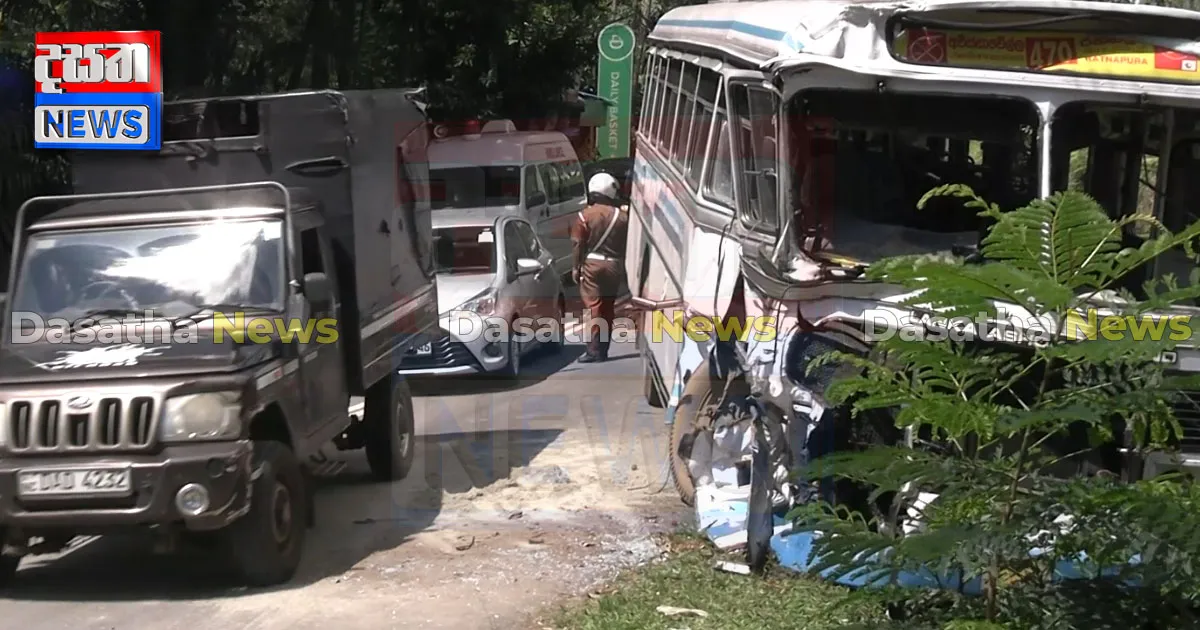
Sixteen injured as bus and tipper truck collide in Ratnapura
At least sixteen people sustained injuries after a private bus and a tipper truck collided in the Hidalana area in Ratnapura.
Free Metro Bus travel for persons with disabilities on December 3
Persons with disabilities can travel free on Metro Buses on December 3 to mark International Day of Persons with Disabilities, Transport Minister Bimal Rathnayake announced.
Woman killed as bus and motorcycle collide in Ruwanwella
A 47-year-old female motorcyclist lost her life following a collision between a bus and her motorcycle along the Avissawella-Kegalle road in Mattamagoda.