New Accounting Framework Proposed to Measure Environmental Costs in GDP
Experts at a Colombo workshop proposed introducing Natural Capital Accounting by 2027 to properly account for environmental degradation in Sri Lanka's economic growth.
In 60 seconds
- ADB and CEPA hosted a workshop in Colombo to discuss Natural Capital Accounting.
- The proposed system aims to measure invisible environmental damages that traditional GDP overlooks.
- Plans are underway to potentially introduce the framework by 2027.
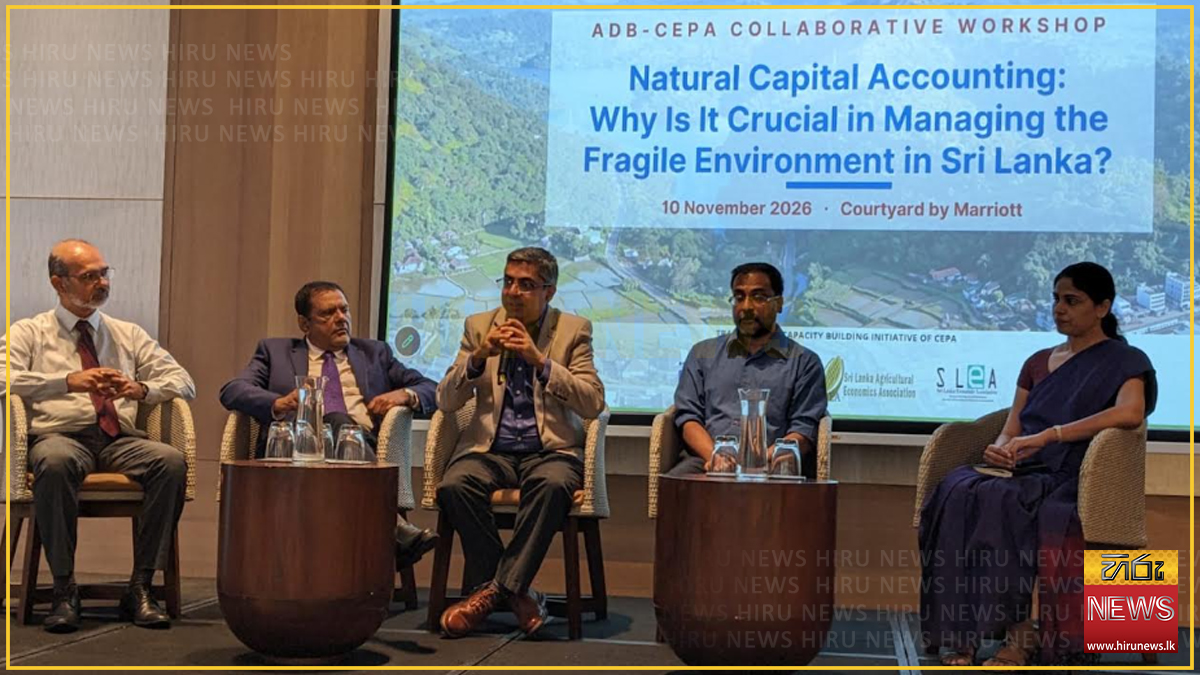
Policy makers and economic experts have highlighted a major gap in Sri Lanka's current measurement of economic growth, noting that Gross Domestic Product (GDP) fails to account for the depletion of vital natural resources such as forests, watersheds, and coastal ecosystems. These concerns were raised during a workshop titled Natural Capital Accounting for Sri Lanka, organized by the Asian Development Bank (ADB) and the Centre for Poverty Analysis (CEPA) at a Colombo hotel.
The discussions focused on introducing a Natural Capital Accounting framework by 2027, with primary attention given to high-altitude water catchments and marine environments. While GDP measures overall production, it often overlooks long-term economic costs such as flood risks, soil erosion, water scarcity, and the loss of coastal resources driven by environmental destruction. Experts noted that under the United Nations System of Environmental-Economic Accounting, data on natural assets can be linked directly with national accounts to bridge these gaps.
Addressing the gathering, ADB Country Director for Sri Lanka, Shanan Cowlin, emphasized that natural resources are vital for the country's economic resilience, livelihoods, and long-term development. She noted that integrating natural capital accounts would provide decision-makers and investors with reliable data to pursue growth while safeguarding ecological assets. Meanwhile, Dr. Herath Gunatilake, Senior Advisor at CEPA, pointed out that political will, fragmented data systems across state agencies, and technical limitations remain key challenges in implementing the framework.
As a foundational step, stakeholders emphasized the need to compile baseline data on the extent and condition of selected watersheds and coastal zones. Representatives from the Ministry of Environment, the Department of Census and Statistics, international agencies, and professional bodies participated in the discussions to map out coordinated data-sharing mechanisms for future development projects.
Sources
Rewritten by the NewsLanka desk from reports by the outlets below.
- Hiru News
Related stories

Sri Lanka credit rating upgraded to B-/B by SP Global Ratings
SP Global Ratings has upgraded Sri Lanka's credit rating to B-/B, citing improving government revenue and rising foreign reserves.
Colombo Port Ranks 17th Among World's Leading Container Ports
The Colombo Port has secured the 17th position globally in the latest UNCTAD Liner Shipping Connectivity Index, placing it among the top twenty container ports.
New insurance scheme launched for passion fruit cultivation in Sri Lanka
The Agricultural and Agrarian Insurance Board has introduced a new insurance scheme for passion fruit growers, offering coverage of around Rs. 387,000 per acre.

IRD warns of heavy fines up to 400000 rupees for delayed tax returns
Taxpayers who fail to submit their income tax returns before November 30 face fines ranging from 50000 to 400000 rupees, according to the Inland Revenue Department.
Sri Lanka and Brazil Sign Agreement to Boost Domestic Sugar Production
Sri Lanka has partnered with Brazil under a US$ 536,046 technical cooperation agreement to enhance local sugarcane cultivation and reduce heavy reliance on imported sugar.
Sri Lanka Trade Deficit Widens to USD 7.9 Billion Amid Higher Imports
Sri Lanka's trade deficit expanded to USD 7.91 billion during the first nine months of the year, driven by a significant surge in import expenditures.