Parliament committee advances tech and community measures to curb human-elephant conflict
A parliamentary committee has underscored the need for GPS tracking, community-based committees, and better veterinary equipment to mitigate the rising human-elephant conflict.
In 60 seconds
- GPS and satellite collar technology will be deployed to monitor elephant movements.
- Local joint committees involving Grama Niladharis and wildlife officers are to be established.
- Parliamentarians stressed the need for mobile veterinary units and portable X-ray machines for wildlife vets.
How this story developed
Monthly commemoration for late Kavantissa tusker organized with Sajith's support
Life-sized statue to honour late Kavantissa tusker in Buduruvakanda
Opposition criticises government over delayed probe into Kavantissa death
Opposition Leader seeks parliamentary privileges inquiry over delayed elephant motion
You are reading Parliament committee advances tech and community measures to curb human-elephant conflict
Sajith Premadasa sponsors religious rites to remember tusker Kawanthissa
Sajith seeks independent probe into delayed parliamentary motion on tusker death
The Sectoral Oversight Committee on Environment, Agriculture and Resource Sustainability has highlighted the urgent requirement for practical and technological measures to address the escalating human-elephant conflict and protect wild elephants. Meeting under the chairmanship of Member of Parliament Hon. Hector Appuhamy, the committee reviewed critical environmental challenges, including migratory patterns, human-elephant interactions, and the circumstances surrounding the death of the elephant Kawanthissa. Lawmakers noted that habitat loss, blocked traditional corridors, and elephants entering agricultural lands in search of food are the primary drivers of the crisis. The Department of Wildlife Conservation is the principal state body tasked with protecting the nation's fauna and flora.
To proactively manage these challenges, the committee emphasized deploying GPS and satellite collar technology to accurately monitor elephant movements in real time. Furthermore, practical community-based solutions were proposed, including setting up local joint committees consisting of Grama Niladharis, wildlife officers, and community members, alongside early warning communication networks to alert villagers.
The discussions also focused on the operational difficulties encountered by wildlife veterinary surgeons, particularly the high risks associated with anaesthetizing wild elephants in the field. To improve safety and animal care, the committee stressed the critical need for technical resources such as mobile veterinary units and portable X-ray machines.
Sources
Rewritten by the NewsLanka desk from reports by the outlets below.
- Newswire
- ITN News
Related stories
GMOA Decides to Support November 30 Trade Union Action
The Government Medical Officers Association has decided to back the islandwide trade union action scheduled for November 30.
Wild elephants break into Anuradhapura bakery to feast on buns
A bakery owner in Shravasthipura, Anuradhapura, reports that wild elephants broke down his walls and ate bread and sweet buns.

Sri Lanka seeks New Zealand's help to repatriate stranded woman
The Sri Lankan government has formally requested New Zealand's assistance to safely bring back a Sri Lankan woman stranded in the Cook Islands.
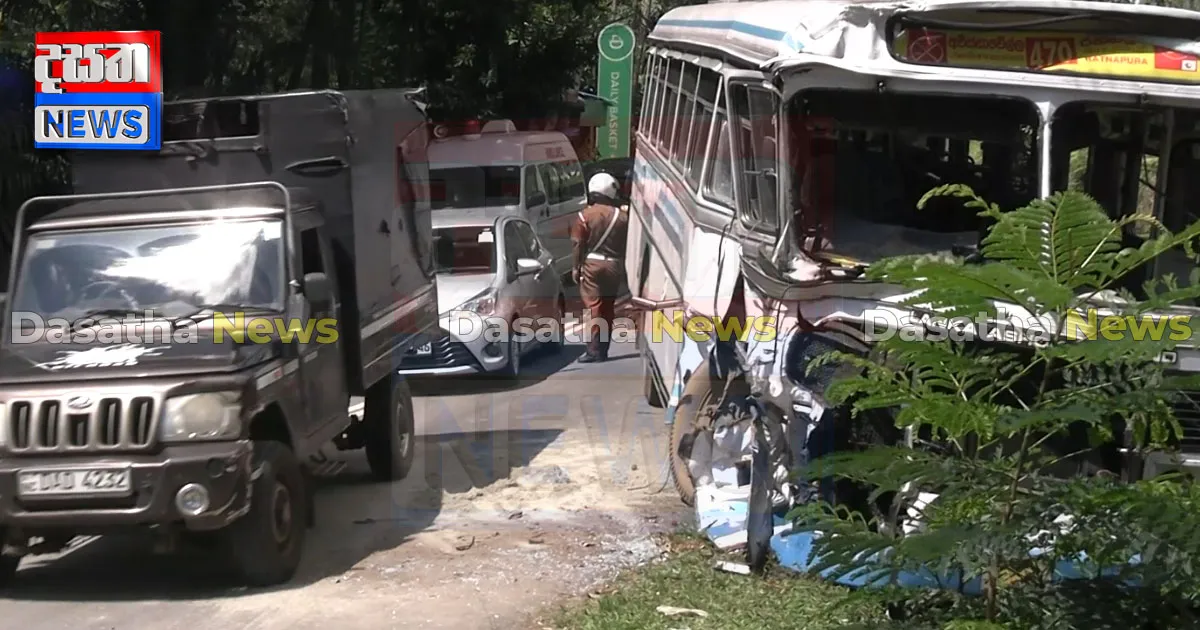
Sixteen injured as bus and tipper truck collide in Ratnapura
At least sixteen people sustained injuries after a private bus and a tipper truck collided in the Hidalana area in Ratnapura.
Free Metro Bus travel for persons with disabilities on December 3
Persons with disabilities can travel free on Metro Buses on December 3 to mark International Day of Persons with Disabilities, Transport Minister Bimal Rathnayake announced.
Woman killed as bus and motorcycle collide in Ruwanwella
A 47-year-old female motorcyclist lost her life following a collision between a bus and her motorcycle along the Avissawella-Kegalle road in Mattamagoda.